Challenge
The challenge was to develop a faculty training program that would help graphic design instructors confidently integrate artificial intelligence (AI) into their courses while maintaining academic integrity, instructional quality, and established learning outcomes. As AI tools become increasingly common in education, instructors face growing expectations to incorporate these technologies while managing demanding workloads, accelerated course schedules, and changing student practices.
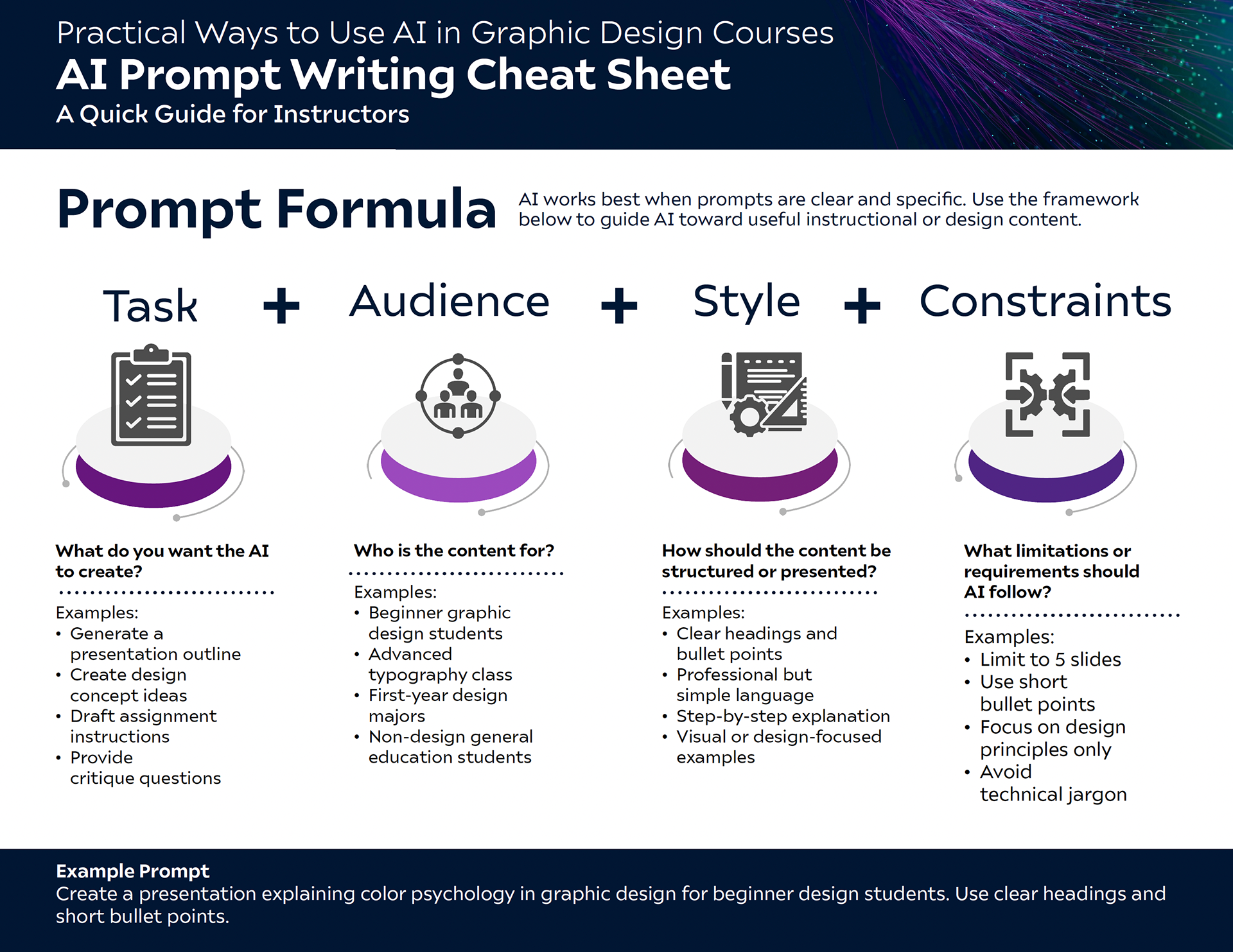
To address this challenge, I conducted a Training Needs Analysis (TNA) focused on identifying faculty knowledge gaps, performance challenges, and opportunities for AI integration. The analysis examined the needs of mid-career graphic design instructors through audience analysis, stakeholder identification, and gap analysis. Research methods included surveys, interviews, focus groups, observations, and curriculum reviews to inform the proposed training solution.Based on the identified needs, I designed Practical Ways to Use AI in Graphic Design Courses, a faculty development experience focused on responsible AI integration and practical classroom applications. The training demonstrated how instructors could use Adobe Express AI to develop instructional content, adapt existing assignments, and establish clear expectations for student AI use without requiring extensive course redesigns.
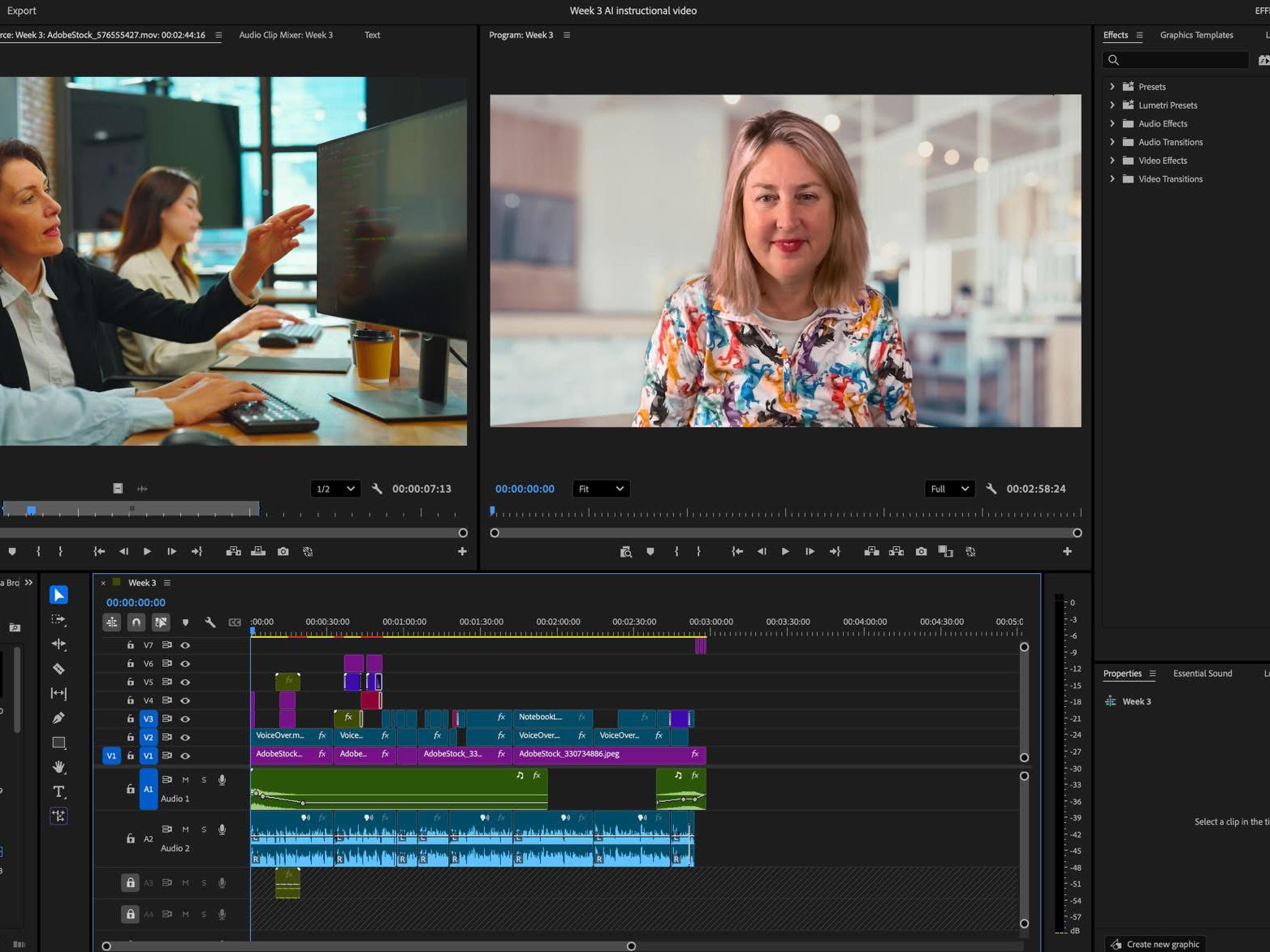
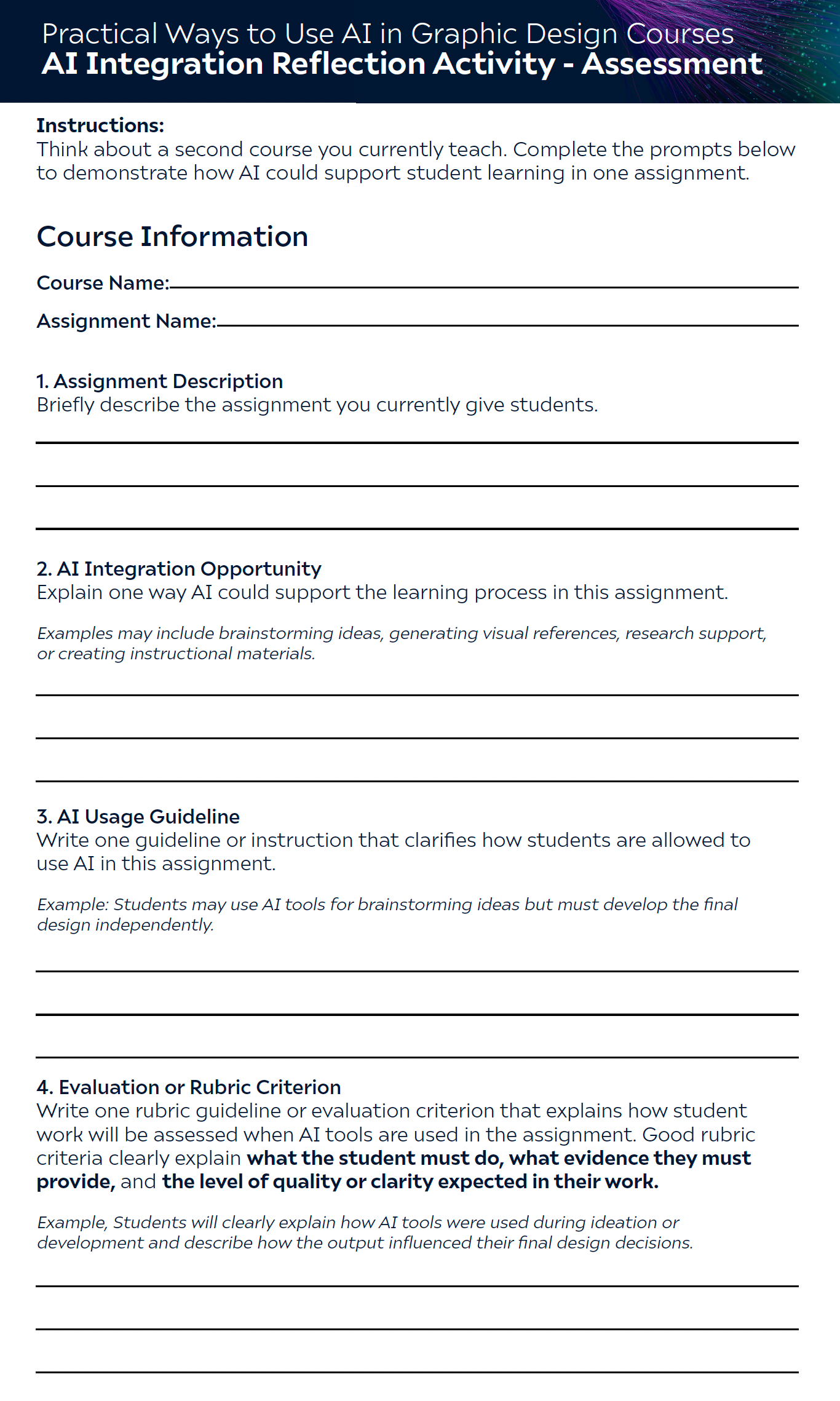
The instructional design process included developing a training presentation, instructional video, quick-reference guide, assessment activities, and an evaluation plan aligned with Kirkpatrick's Four Levels of Evaluation. Together, these resources were designed to support immediate classroom application while providing a framework for measuring learner satisfaction, knowledge acquisition, changes in instructional practice, and potential organizational impact.
Deliverables
Training Needs Analysis (TNA)
Key Competencies
Training Needs Analysis · Performance Gap Analysis · Faculty Development · AI Integration · Instructional Design · Training Evaluation
Tools: Adobe Express AI, Camtasia


Next Steps
The next step would be to pilot the training with graphic design faculty and evaluate how effectively it supports their confidence, instructional efficiency, and ability to integrate AI responsibly into existing coursework. Using Kirkpatrick's Four Levels of Evaluation, I would collect participant feedback, assess knowledge gained, and examine whether instructors apply the strategies introduced during training.
I would also conduct follow-up evaluations to identify changes in instructional practices, challenges encountered during implementation, and opportunities to improve the training materials. These findings would guide future revisions and help establish a scalable faculty development program that supports responsible AI adoption, instructional consistency, and ongoing professional growth.