Challenge
The challenge was to develop a multimodal training experience that would help staff and volunteers at the Osceola County Welcome Center and History Museum transition from traditional, text-based exhibits to more engaging, technology-driven educational experiences. With declining attendance and an increasingly tech-savvy community, the museum needed new ways to capture audience interest and extend its educational outreach beyond its physical location.
To address this challenge, I developed three complementary instructional experiences using audio, video, and an interactive 360° environment. Each format introduced a different approach to engaging audiences while providing staff and volunteers with practical examples of how multimedia could support museum education and school outreach.
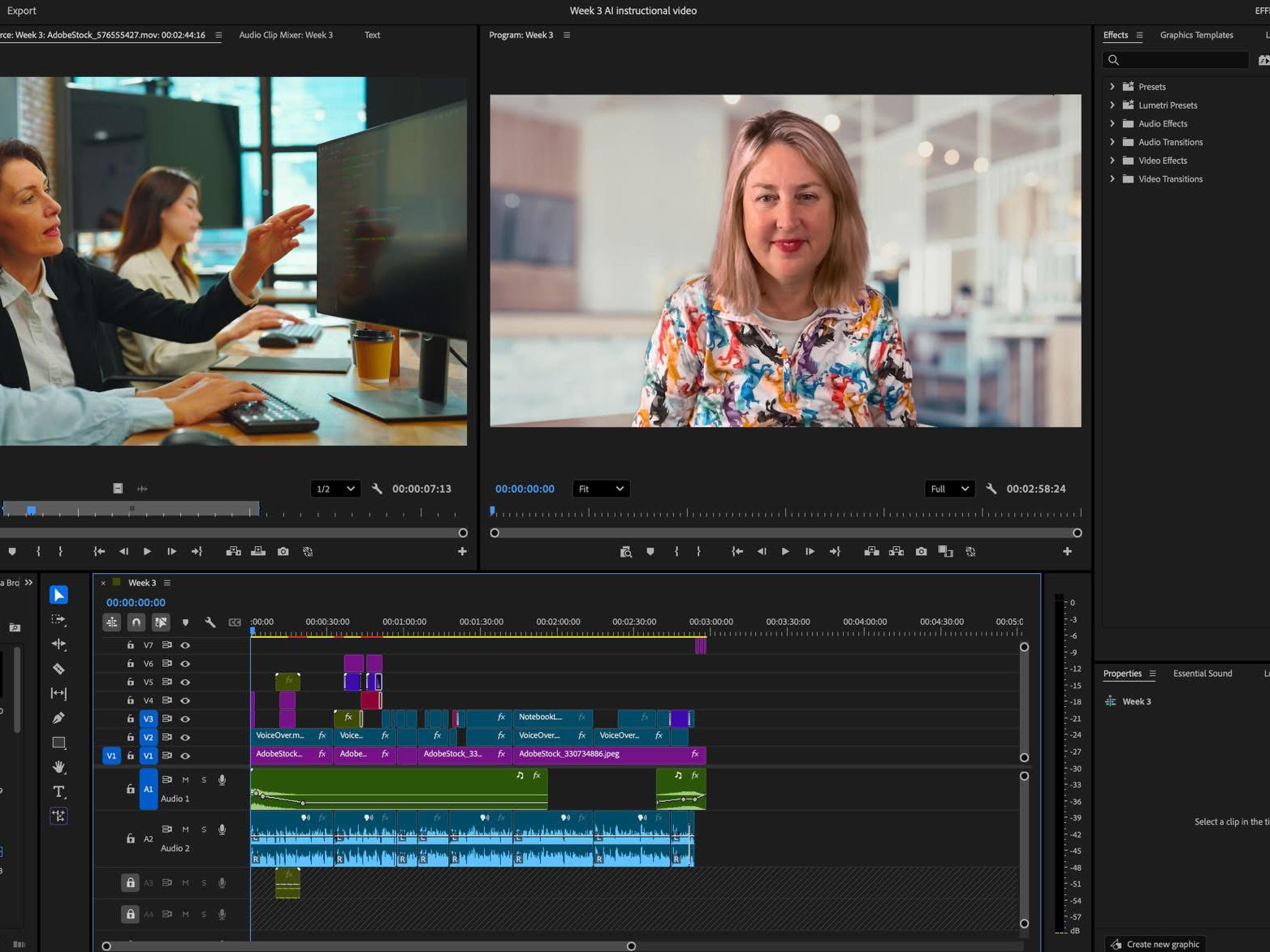
The audio training used storytelling, environmental soundscapes, and narration to demonstrate how sound can bring historical and cultural experiences to life. The instructional video provided a step-by-step demonstration of creating a promotional flyer in Adobe Express to support the museum's Museum on Wheels outreach initiative. The 360° interactive module, developed in Adobe Captivate Classic, allowed learners to explore Florida environments, discover historical artifacts, and interact with informational hotspots and Quick Tip prompts.
The instructional approach drew on experiential learning, cognitive load theory, and multimedia learning principles to balance information delivery with active engagement and practical application.
______________________________________________
I also recommended using the museum's existing password-protected Content Management System (CMS) to deliver the training, providing a familiar, cost-effective platform while recognizing that a Learning Management System (LMS) could offer more advanced tracking and assessment capabilities as the program expands.
This audio training sample (above) demonstrates a narrative, multisensory approach to staff development for the Osceola County Welcome Center and History Museum. It integrates layered ambient sound, storytelling, and hands-on learning strategies to create an immersive experience that strengthens engagement and retention. Grounded in experiential learning and cognitive load theory, the design balances narration and environmental audio to support meaningful, application-based learning.
Deliverables
Key Competencies
Multimodal Learning, Multimedia Instruction, Experiential Learning, Instructional Video Production, Technology Selection
Next Steps
The next step would be to pilot the training materials with museum staff and volunteers to evaluate how effectively each instructional format supports understanding, engagement, and practical application. Through learner feedback, usability testing, and observation, I would examine whether participants can navigate the 360° environment, follow the instructional video to create promotional materials, and identify opportunities to incorporate audio and multimedia into their educational outreach.
I would also evaluate the effectiveness of delivering these resources through the museum's existing CMS, including accessibility, ease of navigation, and compatibility across devices. As the training program expands, I would explore transitioning to an LMS to support learner progress tracking, assessments, and ongoing professional development. These findings would guide future revisions and help the museum create more engaging, accessible educational experiences for staff, volunteers, and the communities they serve.

Example of School Flyer Created During the Training