Challenge
The challenge was to develop a short instructional video that would teach safe horse-handling techniques while demonstrating how simple ground activities can help build trust and confidence. Designed for parents, caregivers, therapeutic riding staff, volunteers, and supporters, the video needed to communicate essential safety practices in a clear, approachable format while illustrating the value of these activities for therapeutic riding participants.
To address this challenge, I developed First Steps with Horses: Learning Trust and Confidence, a 2–4-minute instructional video that combines real-world demonstrations, narration, and instructional storytelling. Rather than simply presenting a series of steps, the video follows a student interacting with a horse, allowing viewers to observe how safe handling techniques and positive interactions contribute to building confidence.
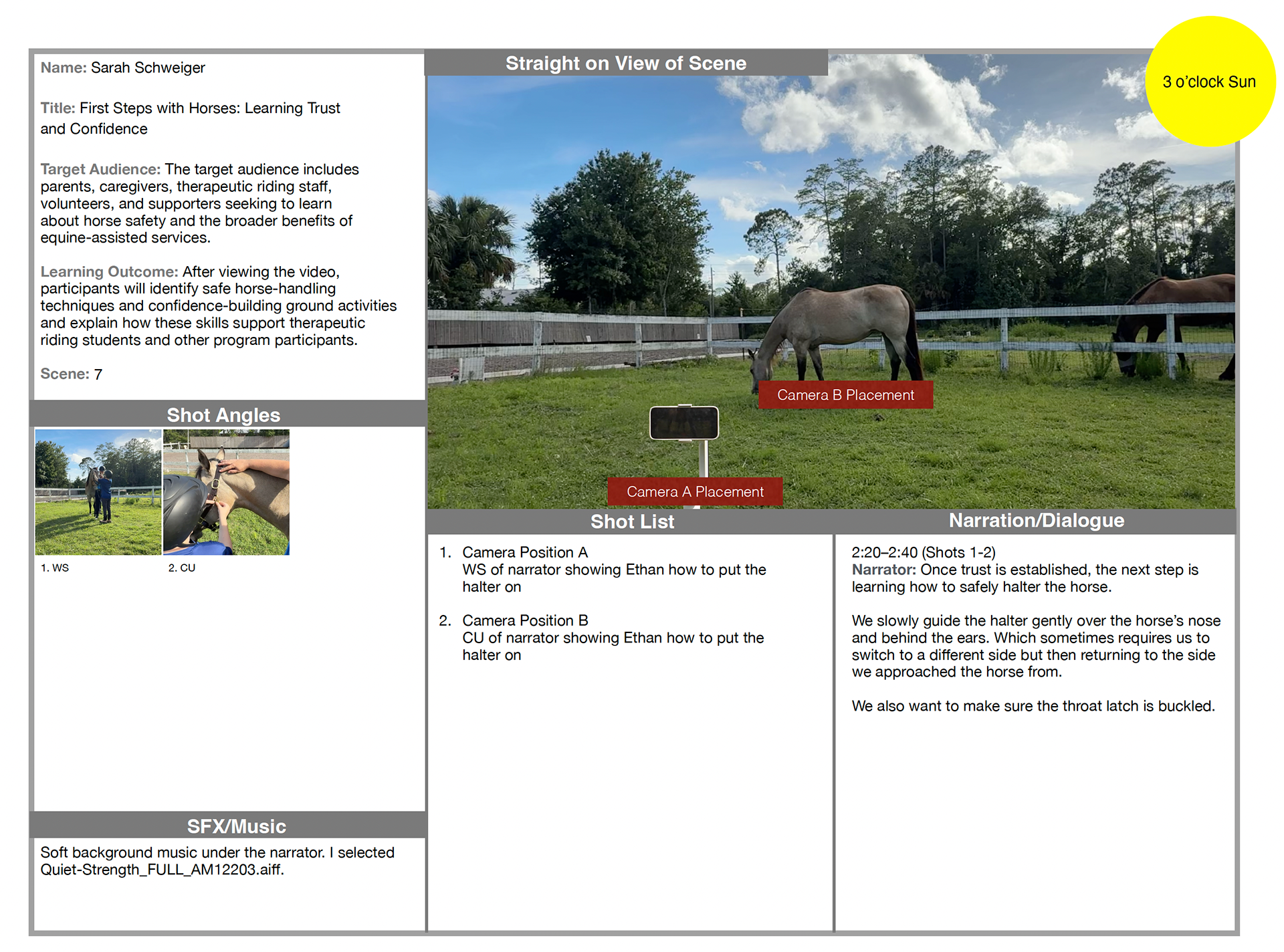
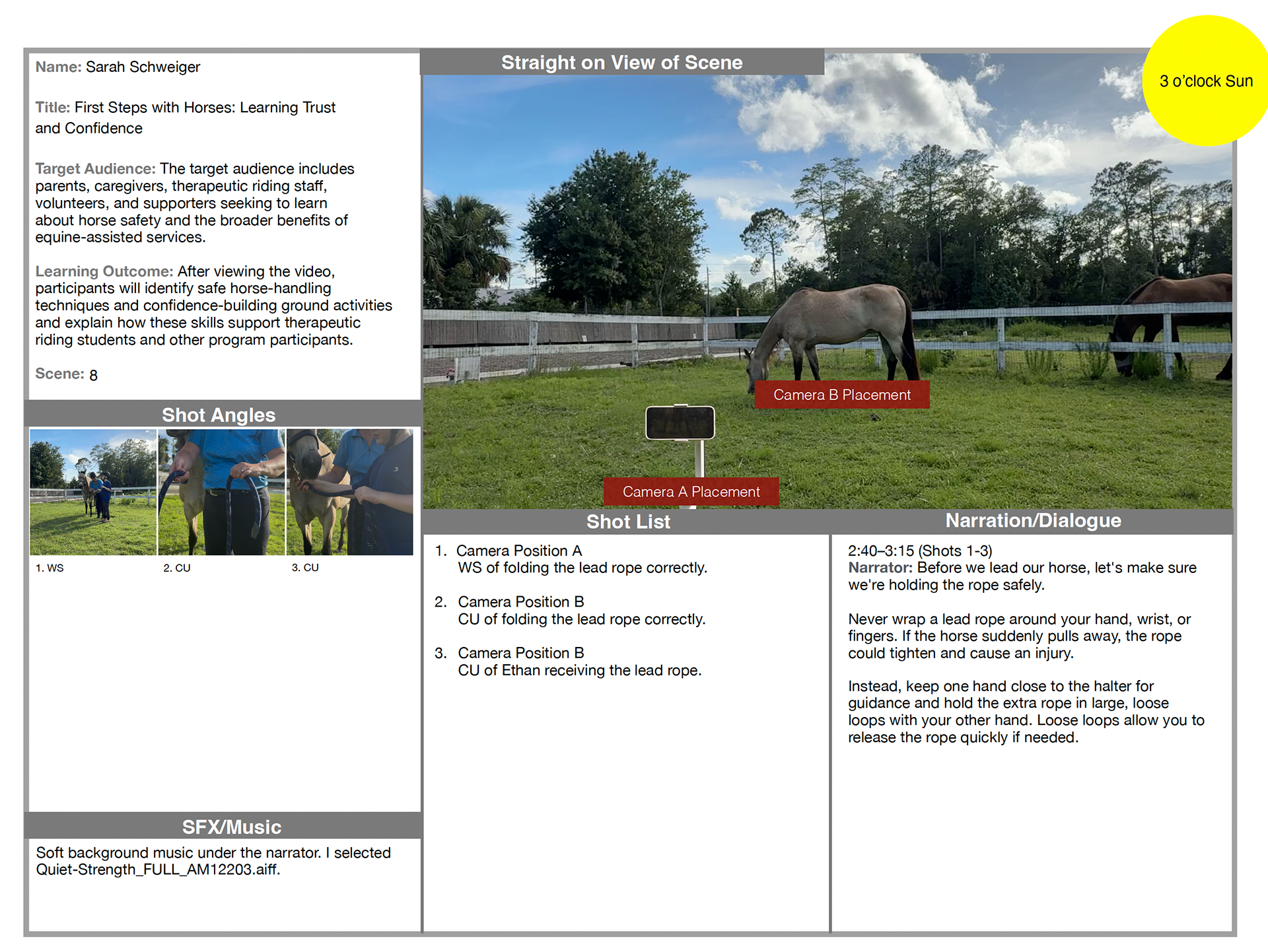
The instruction focuses on essential ground-handling skills, including approaching a horse safely, positioning the halter, handling the lead rope correctly, and leading the horse. Through purposeful camera angles, close-up demonstrations, and narration, I emphasized important safety considerations while making each step easy to follow.
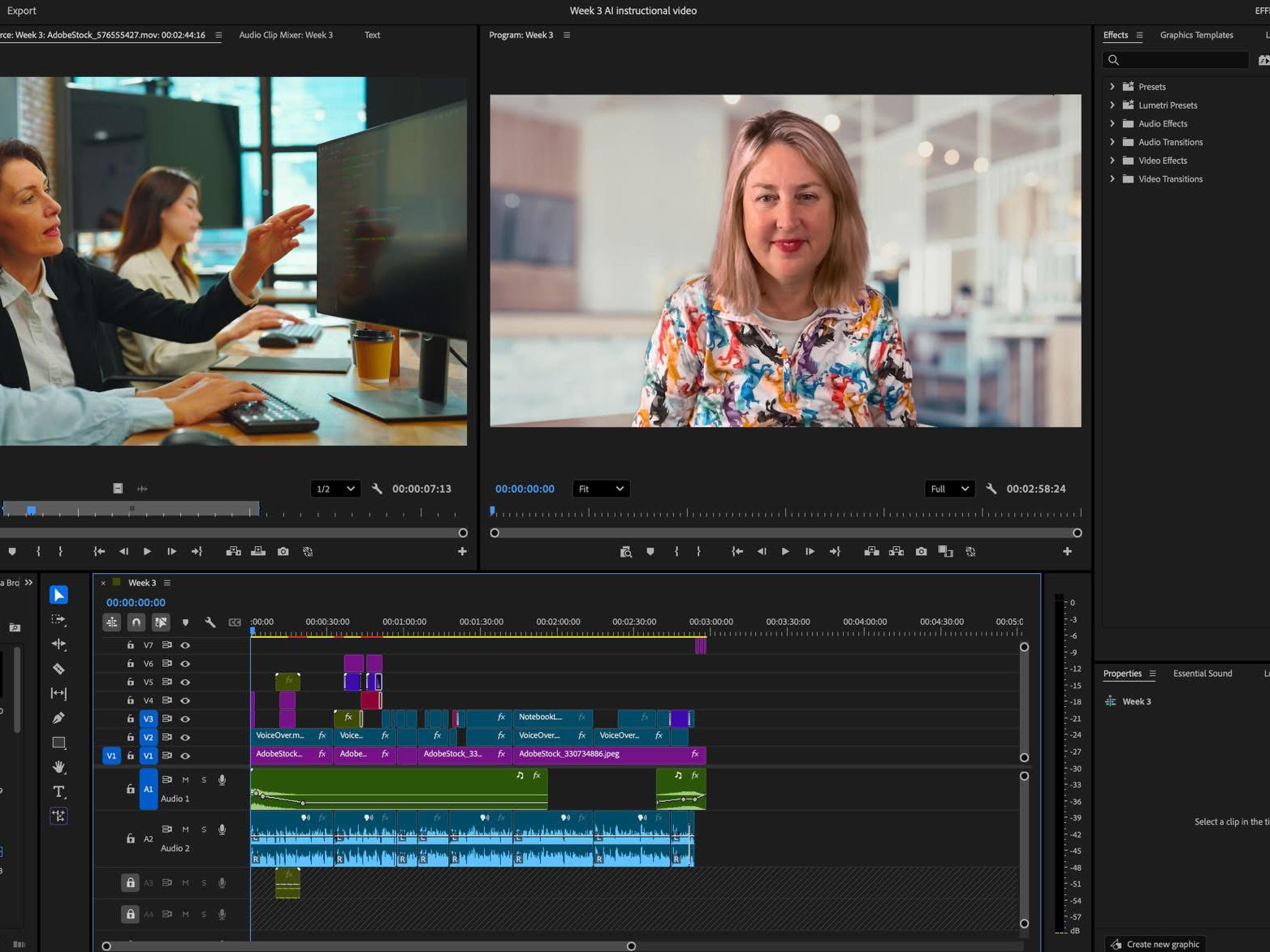
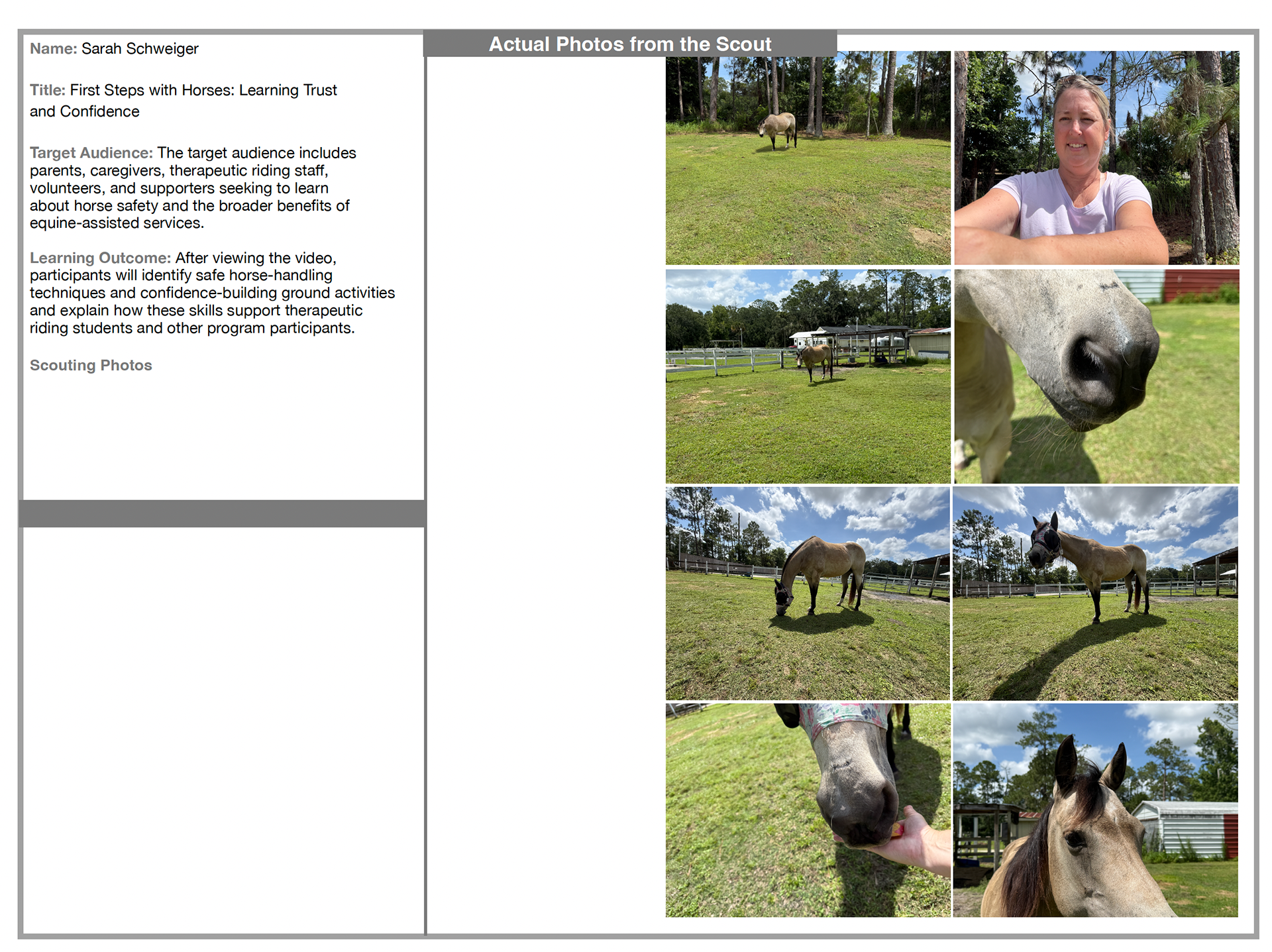
The instructional design and production process included storyboarding, location scouting, filming, audio recording, editing, and incorporating peer feedback. These elements helped transform a static storyboard into an engaging instructional experience that connects procedural learning with the emotional and physical benefits of working with horses.



Deliverables
Key Competencies
Instructional Storytelling, Video Production, Storyboarding, Procedural Training, Safety Instruction
Next Steps
The next step would be to evaluate the video's effectiveness with parents, caregivers, therapeutic riding volunteers, and other intended viewers. Through learner feedback and observation, I would assess whether the demonstrations, narration, and pacing clearly communicate the safety procedures and help viewers understand the importance of building trust and confidence through ground activities.
I would also explore opportunities to expand the video into a short training series covering additional foundational horse-handling skills. These resources could support volunteer orientation and caregiver education within therapeutic riding programs. Feedback from experienced horse handlers and therapeutic riding professionals would guide future revisions, helping ensure that the instructional content remains accurate, accessible, and aligned with established safety practices.